
Townhouse vs Single Family: Which Home Fits?
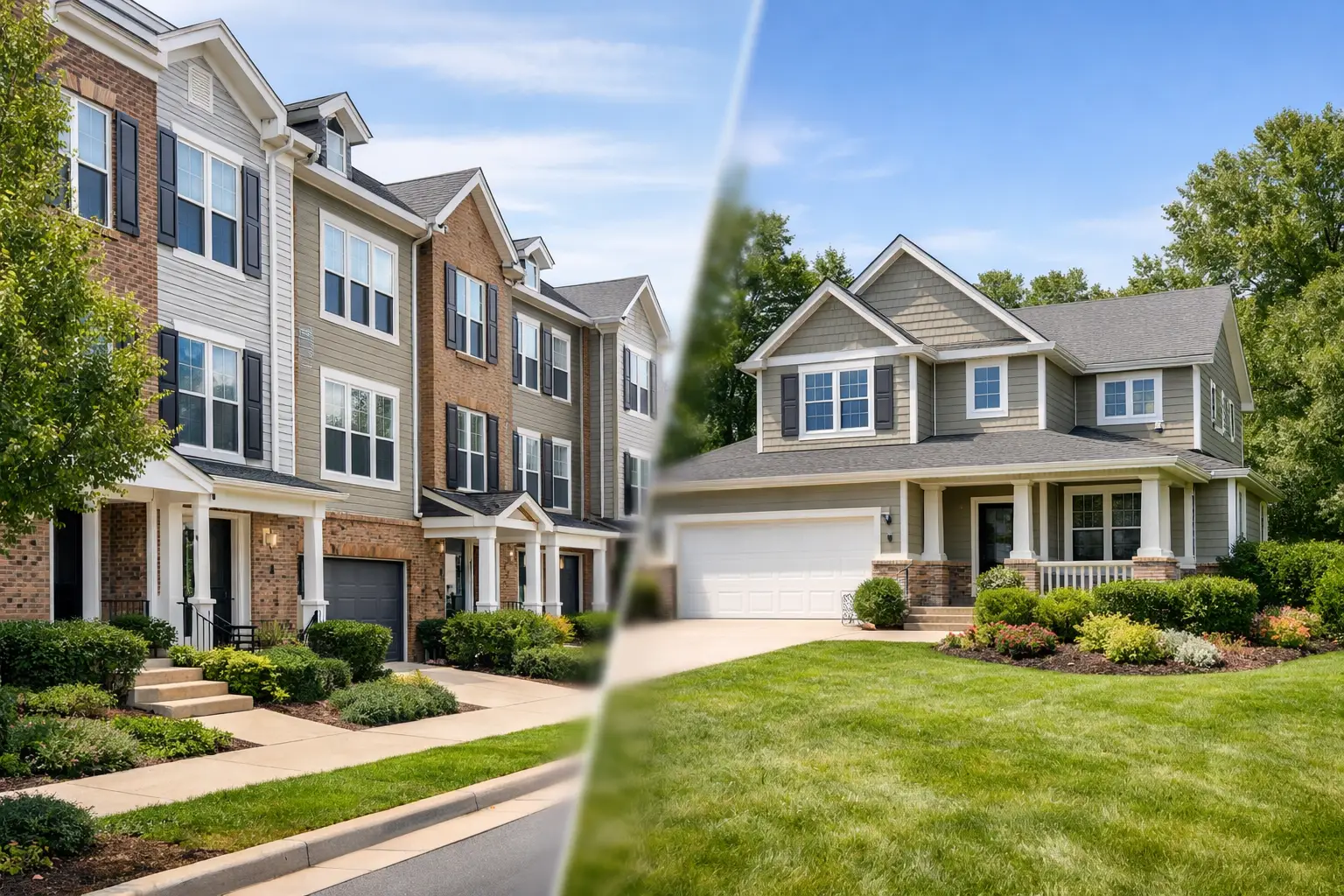
A Saturday of touring homes in Southeast Wisconsin can make the townhouse vs single family decision feel surprisingly close. One home may offer a newer kitchen, a manageable payment, and no driveway to plow. The other may offer a yard, more separation from neighbors, and room to grow. The right choice is not simply about square footage. It is about how you want to spend your money, time, and weekends after closing.
Townhouse vs Single Family: Start With Ownership
A single-family home is usually a detached property on its own lot. You own the structure, the land beneath it, and typically the responsibility for everything that comes with both. That can mean more freedom to landscape, add a patio, choose exterior colors where local rules allow, or replace a roof on your own timeline. It also means repairs and seasonal upkeep are yours to manage and fund.
A townhouse shares one or more walls with neighboring homes but has its own entrance and often multiple levels. The ownership arrangement deserves close attention because not every townhouse works the same way. Some are fee-simple properties, where you own the structure and land within defined boundaries. Others are condominium units, where you own the interior of your home and hold an interest in common areas through an association.
That distinction affects insurance, maintenance responsibilities, financing details, and monthly costs. Never assume that a townhouse association covers the same items as another community. One association may handle roof replacement, exterior siding, lawn care, and snow removal. Another may only maintain private roads and shared landscaping.
The Monthly Payment Is More Than the Mortgage
Townhouses often have a lower purchase price than similarly located detached homes, which can reduce the down payment and mortgage payment. For buyers focused on getting into a preferred school district, closer to work, or nearer to restaurants and services, that lower entry point can be meaningful.
But the purchase price is only one line of the budget. Townhouse owners may pay monthly, quarterly, or annual homeowners association dues. Those dues can bring real value when they cover exterior work, lawn care, snow removal, or community amenities. They can also limit flexibility in your monthly budget, especially if dues increase or a special assessment is needed for a major repair.
Single-family homes do not usually have required association dues, although some neighborhoods do. Instead, owners should plan for their own maintenance reserve. A useful rule is to look beyond routine costs such as mowing, utilities, and minor repairs, then consider larger expenses: a furnace, water heater, roof, driveway, appliances, and exterior painting or siding work. A detached home may feel less expensive month to month until one of those bigger projects arrives.
Property taxes and insurance also vary by property type, age, location, and ownership structure. A condo-style townhouse may require a different insurance policy than a detached house because the association insures part of the building. Your lender and insurance professional can clarify the required coverage before you write an offer.
Privacy, Space, and Everyday Living
The practical difference between these homes often becomes clearest after move-in. A single-family home usually provides more privacy, a larger yard, and greater distance from neighbors. For households with pets, children, hobbies that need storage, or a strong preference for outdoor space, that can be a deciding advantage.
Townhouse living can be a better fit for buyers who want less exterior work without moving into a one-level condo. Many townhouses offer attached garages, private entrances, basements, and enough space for a home office or guests. The trade-off is proximity. Shared walls can mean more awareness of neighboring households, even in well-built properties.
Before making a decision, picture a normal February morning and a normal July weekend. Would you rather handle the snow, landscaping, and home projects yourself? Or would you prefer to pay for a community structure that takes some of those tasks off your list? Neither answer is more responsible. It reflects how you want to live.
Rules Can Protect Value or Feel Restrictive
Homeowners associations are often misunderstood as either a burden or a complete maintenance solution. In reality, the quality of an association depends on its rules, finances, communication, and reserve planning.
Rules may govern pets, parking, rentals, fences, outdoor furniture, satellite dishes, exterior changes, and use of common areas. For some buyers, these standards help preserve a neat, consistent neighborhood and can support resale appeal. For others, they feel too limiting, particularly if they want to rent the home later, own multiple vehicles, or personalize the exterior.
A detached single-family home generally gives you more control, but it may still be subject to municipal requirements, zoning rules, deed restrictions, or an optional or mandatory neighborhood association. Freedom is relative. Review the property details rather than relying on the label alone.
What Southeast Wisconsin Buyers Should Look For
In Washington, Waukesha, and Ozaukee Counties, the local climate makes maintenance responsibilities especially relevant. Snow removal, drainage, roof condition, gutters, driveways, and mature trees can all affect the cost and effort of owning a detached property. A townhouse community that includes snow and lawn care may offer genuine convenience, particularly for frequent travelers, busy professionals, or buyers who simply do not want another weekend obligation.
At the same time, many buyers in these areas value a larger lot, a fenced yard, a three-car garage, or space for recreation and entertaining. Those needs often point toward a single-family home, even if it means taking on more upkeep or choosing a slightly different location.
Location can also shift the equation. A well-maintained townhouse near a walkable downtown, trail system, or employment center may hold strong appeal compared with a detached home farther from the places you use most. The best comparison is between specific homes and neighborhoods, not broad property categories.
Due Diligence Matters More With a Townhouse
When considering a townhouse, ask for the association documents early. The monthly dues are only the starting point. You want to understand what is covered, what is excluded, whether there are planned projects, and whether the association has adequate reserves.
Pay particular attention to the association budget, recent meeting minutes, insurance information, rules and regulations, and any record of special assessments. Meeting minutes can reveal recurring concerns such as roof repairs, water intrusion, parking conflicts, or rising costs. A low monthly fee is not automatically a good sign if it means the association has not set aside enough money for future work.
For a single-family home, the inspection should focus on both the house and the site. Look carefully at drainage, grading, the age and condition of major systems, foundation conditions, and signs that deferred maintenance could become your expense soon after closing. A thorough inspection does not eliminate risk, but it gives you a clearer basis for negotiations and planning.
In either case, review seller disclosures, confirm what personal property is included, and ask direct questions. Is the garage heated? Who maintains the fence? Has the roof been replaced? Are there pet restrictions? Is the basement finished with permits where required? Small details can affect the usefulness and long-term cost of a home.
Resale Should Inform, Not Control, Your Choice
Single-family homes often appeal to a broad buyer pool because they offer land, privacy, and flexibility. That does not mean every detached home will outperform every townhouse. Condition, price, location, layout, school district, association health, and market timing all influence resale.
Townhouses can be highly marketable when they are well maintained, appropriately priced, and located in a community buyers want. They may especially appeal to first-time buyers, downsizers, and buyers seeking a lower-maintenance lifestyle. However, restrictive rental rules, high dues, pending assessments, or poorly maintained common areas can narrow the pool of future buyers.
The most reliable resale strategy is to buy a home that meets your needs without stretching your budget so far that routine maintenance becomes difficult. A home that fits your life for the next several years is usually a better decision than one chosen solely for a predicted resale outcome.
A townhouse can offer a practical path to ownership, convenience, and a desirable location. A single-family home can offer room, autonomy, and a stronger sense of separation. The better choice is the one whose costs, responsibilities, and daily rhythm feel sustainable to you. At Homes by Stallings, that is the conversation worth having before the offer is written.
Recent Posts









GET MORE INFORMATION