
How to Read Home Listings With Confidence

A home can look like the right fit in the first six photos and still be the wrong purchase by the time you understand the location, condition, monthly cost, and competition. Home listings are a starting point, not a complete picture. Reading them carefully helps buyers make faster decisions without making rushed ones.
For buyers in Washington, Waukesha, and Ozaukee Counties, the details matter even more because a few miles can change school districts, commute patterns, property taxes, lot sizes, and the pace of the market. The goal is not to find a perfect listing. It is to identify the homes worth seeing, ask better questions, and recognize when a property deserves a closer look.
Start With the Facts, Then Read Between the Lines
The headline features get attention: bedroom count, square footage, price, and photos of an updated kitchen. Those basics are useful, but they do not tell you whether a property fits your day-to-day life or your budget.
Begin with the core property facts. Confirm the home type, year built, lot size, finished square footage, bedroom and bathroom count, garage capacity, and basement status. A listing that says “four bedrooms” may include one in the lower level or one that is better suited as an office. “Finished basement” can mean anything from a fully permitted family room to a modest rec space with limited ceiling height.
Pay attention to what is included in the square footage. Above-grade living area is usually more valuable for appraisal and resale purposes than finished space below grade. Both can be useful, especially for a growing family, but they are not interchangeable.
The same goes for bathrooms. A home with two full baths functions differently from one with one full bath and one half bath, even if both are described as having “two bathrooms.” Details like this shape how a home lives, not just how it appears online.
What Home Listings Can Tell You About Value
The asking price is an invitation to evaluate the home, not a guarantee of market value. Sellers and their agents consider recent sales, condition, improvements, local demand, and pricing strategy. Sometimes the list price is positioned to attract multiple offers. Other times it reflects a seller’s need for more room to negotiate.
Look at the price in context. Compare it with similar homes in the same community, not simply homes with the same number of bedrooms across a county. A four-bedroom home in a walkable village location may command a different price than a similar-sized home farther from amenities, even if both appear comparable at first glance.
Property taxes deserve equal attention. In Southeast Wisconsin, taxes can vary meaningfully between neighboring municipalities and school districts. A home with a lower purchase price may carry higher annual taxes, changing the monthly payment more than buyers expect. Ask for the current tax amount, but also remember that taxes may change after a sale, reassessment, or future levy adjustment.
Association fees are another monthly factor. A condominium or neighborhood association may cover exterior maintenance, snow removal, lawn care, water, or insurance. It may also have rules on pets, rentals, fencing, or exterior changes. The fee itself is only part of the question. Buyers should understand what it covers, what it does not cover, and whether the association has adequate reserves for future expenses.
Read the Description for Clues, Not Just Highlights
Listing descriptions are designed to present a home favorably, as they should be. Still, the wording can provide useful clues when you know what to look for.
Terms such as “move-in ready,” “well maintained,” and “updated” are subjective. They are worth exploring, but they are not substitutes for dates, receipts, permits, or inspections. If a listing highlights a newer roof, furnace, windows, or kitchen, ask when the work was completed and whether transferable warranties or documentation are available.
Certain phrases may signal a property that needs more investigation. “Bring your ideas,” “sold as is,” “estate sale,” or “priced accordingly” do not automatically mean a bad purchase. They do mean that buyers should budget for repairs, allow for a thorough inspection, and avoid assuming cosmetic updates are the only work needed.
Watch for what the description does not say. If a home has an older age but no mention of mechanical updates, it is reasonable to ask about the roof, HVAC system, electrical panel, plumbing, foundation, and drainage. A seller may simply have limited information, particularly with an estate or long-held family property. That uncertainty should affect how you evaluate risk and price.
Study Photos With a Practical Eye
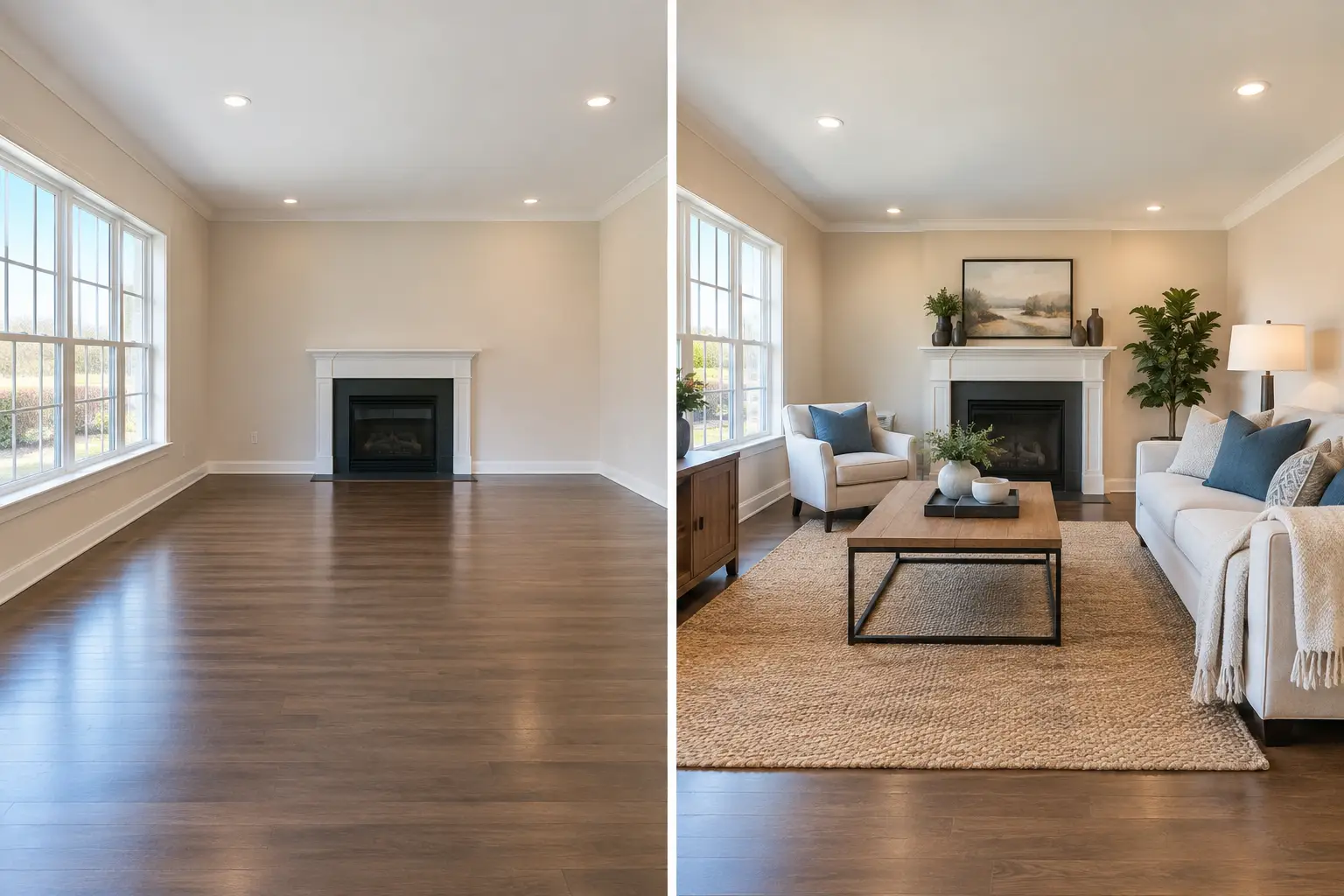
Photos help you decide whether to schedule a showing, but they can also create false confidence. Wide-angle lenses make rooms feel larger. Bright editing can soften darker spaces. A carefully framed image may leave out a neighboring commercial building, a steep backyard, or an aging utility area.
Instead of only noticing the staged features, look for the fixed elements that are harder and more expensive to change. Check window placement, ceiling height, floor plan flow, storage, driveway slope, lot privacy, and the condition of exterior surfaces. Consider whether the kitchen layout works for how you cook, whether the mudroom can handle your household, and whether bedrooms are positioned appropriately for your needs.
Exterior photos deserve more time than many buyers give them. In Wisconsin, roof condition, grading, gutters, siding, driveway wear, and tree proximity all affect maintenance planning. A mature tree-lined lot can be a major asset, but large trees near a roof, sewer lateral, or foundation may require additional care.
Virtual tours and floor plans can be helpful, especially when narrowing options. They cannot replace standing in the home. Noise levels, natural light, traffic, odors, ceiling transitions, and the feeling of a neighborhood are difficult to judge from a screen.
Location Is More Than a Map Pin
A listing may identify a desirable city or ZIP code while sitting near a busy road, industrial use, railroad tracks, flood-prone area, or boundary between school districts. None of those details necessarily rule out a home. The right answer depends on your priorities, budget, and future plans.
Before writing an offer, visit the area at different times if possible. Drive the morning commute route. Notice evening traffic and weekend activity. Look at nearby homes, sidewalks, parks, drainage patterns, and the direction of the backyard. If you work from home, check cell reception and internet options rather than assuming service will meet your needs.
For families, school district information may be an important consideration, but buyers should verify attendance boundaries and enrollment details directly. For downsizers or first-time buyers, proximity to grocery stores, health care, recreation, or major highways may carry more weight. Good real estate decisions are personal. The best location is the one that supports the life you expect to live there.
Know When a Listing Requires Fast Action
Days on market can offer context, but they are not a verdict. A new listing in a high-demand price range may receive strong attention quickly. A property that has been available longer may be overpriced, may need work, or may simply be waiting for the right buyer.
If a home stands out, move from online review to informed action. Schedule a showing promptly, review disclosures and available documents, and discuss the likely competition before assuming there will be time to decide later. Acting quickly does not mean skipping due diligence. It means getting the information you need while the opportunity is still available.
A strong offer is not always the highest offer. Closing timeline, financing strength, contingencies, inspection approach, and seller needs can all matter. The right strategy depends on the individual property and the buyer’s comfort level with risk.
Turn a Good Listing Into a Smart Decision
The most useful home listings create questions. Why is the price positioned here? Which improvements add lasting value? What will ownership cost each month and over the next five years? Does the layout solve the problems your current home creates?
Homes by Stallings helps clients turn those questions into a clear plan, with local perspective and direct guidance from the first showing through closing. A listing can capture your attention, but a careful review of the home, the neighborhood, and the numbers is what gives you confidence to move forward.
When a property feels promising, pause long enough to evaluate the details that will still matter after move-in day. The right home is not just the one that photographs well. It is the one that supports your goals, fits your finances, and feels right once you have seen the full picture.
Recent Posts








GET MORE INFORMATION